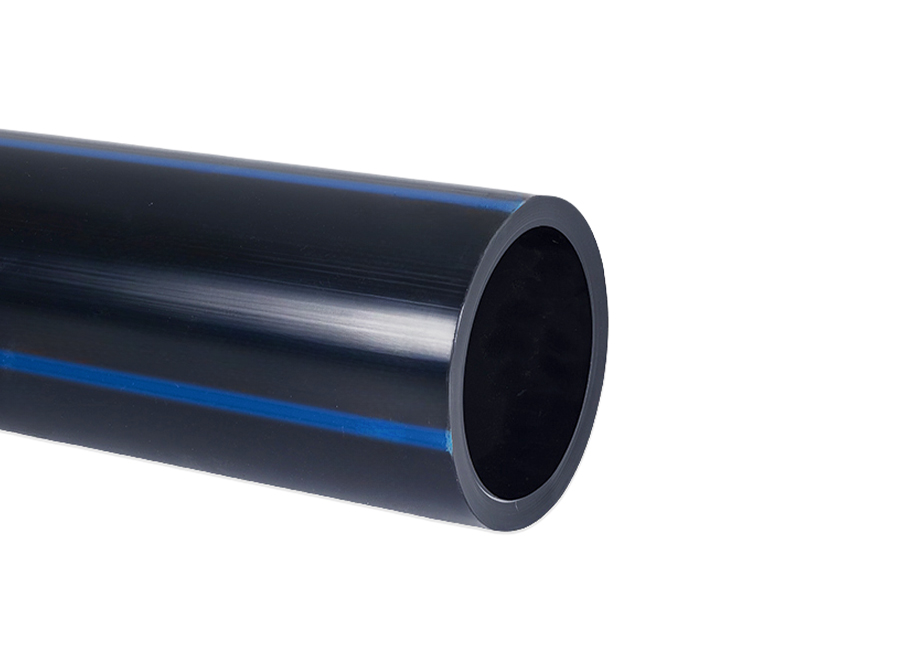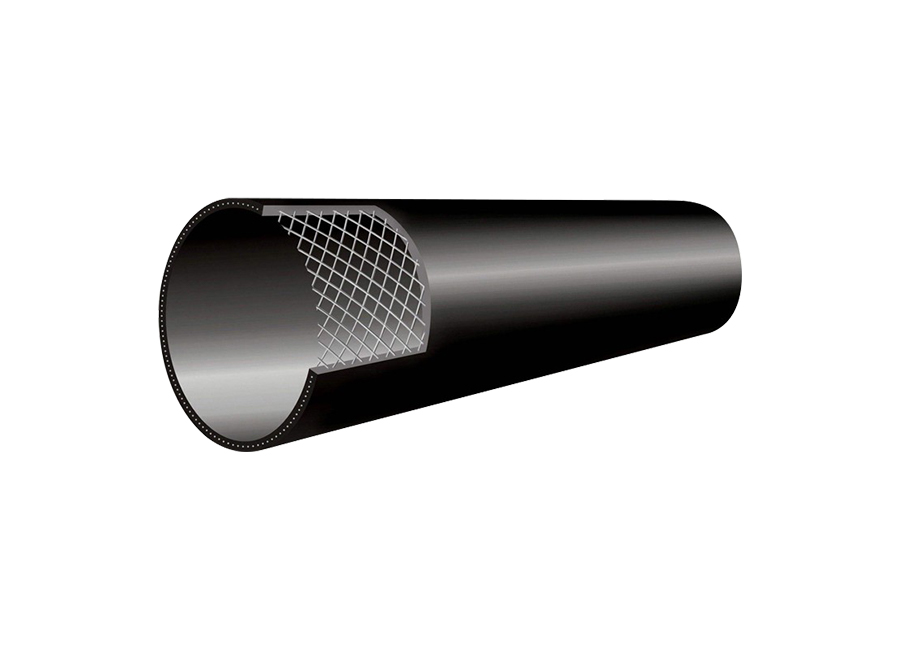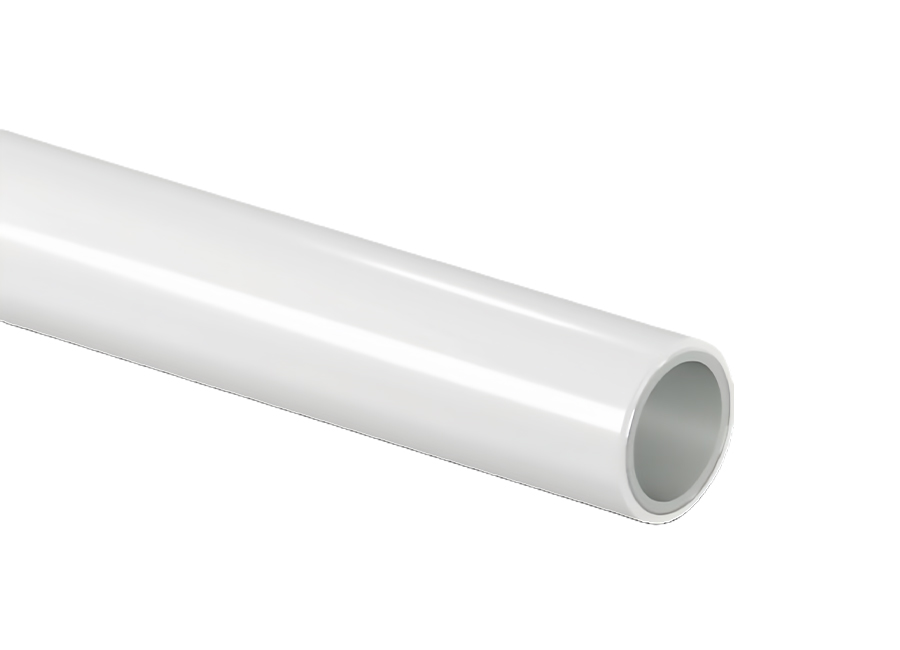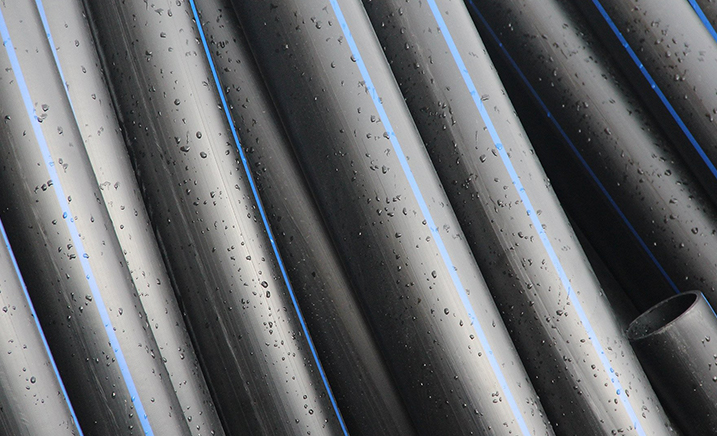
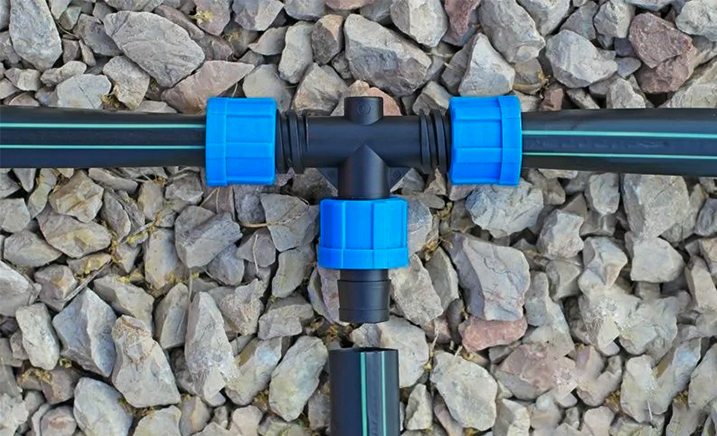
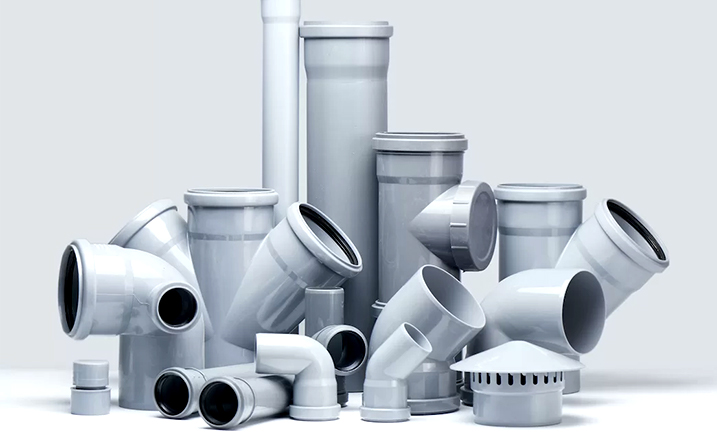
A purchase order that simply says "200 mm PE pipe" can describe six different pipes. The outside diameter is fixed at 200 mm, but the wall thickness can run from 7.7 mm to 22.2 mm depending on the pressure class, and each version carries a different bore, a different weight per metre, and a different fusion schedule. Buyers who leave the pressure class out of the RFQ regularly end up with a pipe that fits the fittings but fails the hydraulic or hydrostatic test — or one that is over-specified and far heavier, and more expensive, than the project needs.
This guide explains how PE pipe sizes and dimensions actually work: what the markings on the pipe mean, how SDR and PN interact, where metric and IPS sizing collide, and what belongs in a specification so that the quotation you receive matches the pipe you can install.
 |
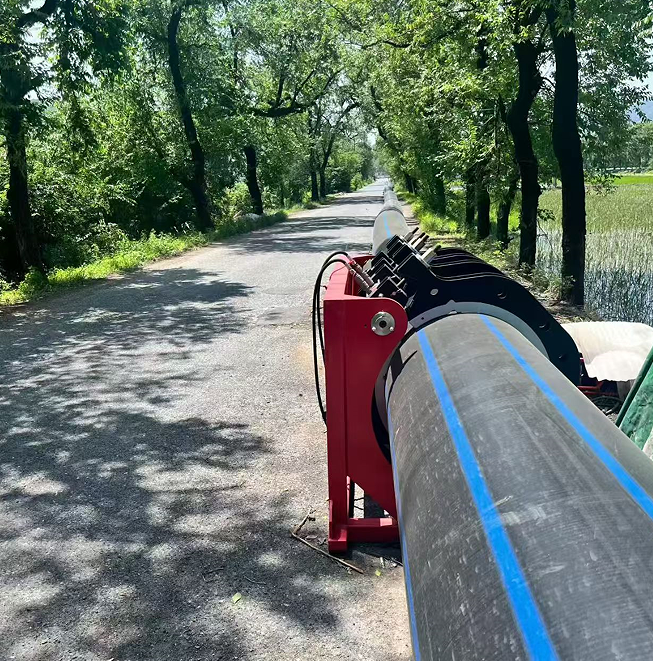 |
How PE Pipe Is Measured: Outside Diameter First, Wall Second
Polyethylene pipe is a constant-outside-diameter product. In the metric system covered by ISO 4427 and EN 12201, the number printed on the pipe — 110 mm, 200 mm, 315 mm — is the outside diameter, not the bore. In the North American IPS system the nominal size still refers to a historical iron-pipe bore, but the dimension that is actually controlled in the standard is the OD.
Wall thickness is a separate decision, set by the pressure class. The link between the two is the Standard Dimension Ratio:
SDR = outside diameter ÷ minimum wall thickness
Because the ratio is fixed for a given class, the wall grows with the diameter while the pressure rating stays constant. Take a 200 mm pipe: at SDR 11 the wall is 18.2 mm and the bore is about 164 mm; at SDR 26 the wall is 7.7 mm and the bore is nearly 185 mm. Both are sold as "200 mm pipe", both accept the same 200 mm fusion fittings, and they behave very differently in service.
For PE100 water service at 20 °C, pressure ratings are derived from a design stress of 8 MPa (an MRS of 10 MPa divided by a 1.25 safety factor), which gives the working relationship PN ≈ 2 × 8 ÷ (SDR − 1). That is why SDR 11 corresponds to PN 16 and SDR 17 to PN 10 across the ISO and EN standards. Above 20 °C the allowable pressure falls and a de-rating factor applies, so a line carrying warm water or certain chemical streams should be specified against a higher class than the ambient-temperature table suggests.
The Size Bands and What Each One Is Used For
Diameter choices in PE follow application rather than fashion. The table below shows how the usual metric bands are supplied and where they are typically used; exact availability depends on the manufacturer's extrusion and coiling capacity.
| Size band (OD) | Usual supply form | Typical applications |
|---|---|---|
| 20–63 mm | Coils, 50–200 m | Service lines, irrigation laterals, cable duct, small drainage runs |
| 75–160 mm | Coils or 6/12 m straight lengths | Distribution mains, farm reticulation, risers, plant process lines |
| 200–400 mm | Straight lengths, 6/12 m | Municipal water mains, sewer force mains, industrial cooling water |
| 450–800 mm | Straight lengths, 6/12 m | Trunk mains, sea outfalls, large industrial headers |
| 900–1600 mm | Straight lengths, fabricated fittings | Bulk water transmission, marine outfalls, storage and intake works |
Two points are worth repeating to the engineering team before sizes are frozen. First, hydraulic capacity follows the bore, so the choice between SDR 11 and SDR 17 at the same OD changes both pressure rating and head loss. Second, because PE has a very smooth bore and does not tuberculate or scale, a replacement line is often sized one nominal step below the steel main it replaces — worth confirming with a friction-loss calculation rather than a rule of thumb.
SDR, PN and Wall Thickness: Reading the Numbers Together
The clearest way to compare options is to hold the OD constant and let the numbers move. The table below uses a 200 mm PE100 pipe at 20 °C water service.
| SDR | Nominal pressure (PN) | Minimum wall thickness | Approximate bore |
|---|---|---|---|
| SDR 26 | PN 6.3 | 7.7 mm | 184.6 mm |
| SDR 21 | PN 8 | 9.6 mm | 180.8 mm |
| SDR 17 | PN 10 | 11.9 mm | 176.2 mm |
| SDR 13.6 | PN 12.5 | 14.7 mm | 170.6 mm |
| SDR 11 | PN 16 | 18.2 mm | 163.6 mm |
| SDR 9 | PN 20 | 22.2 mm | 155.6 mm |
Values are nominal and assume PE100 resin, water at 20 °C and a 50-year design basis. A project located on high ground with a large static head, or one with frequent surge events, generally justifies the heavier wall even where the steady-state pressure looks comfortable. Conversely, gravity sewers and low-head outfalls are routinely built in SDR 26 or SDR 33 because pressure is not the governing load — soil and installation loads are.
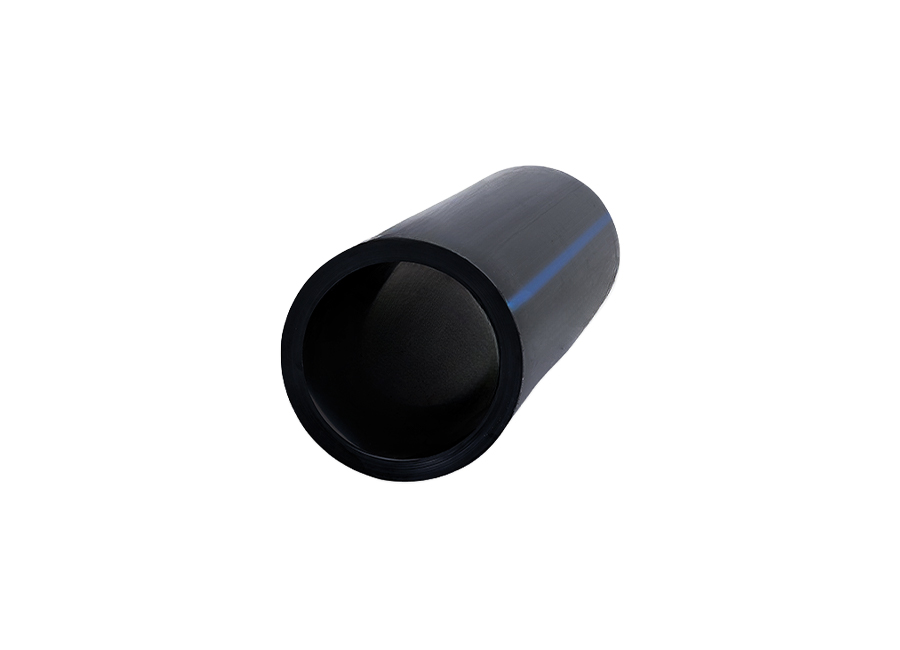 PE100 HDPE Pipe in Multiple SDR Pressure GradesPE100 HDPE pipe for pressure and gravity lines, offered in SDR11 to SDR26 grades and hot-melt welded joints; review wall class against head and surge.View Product →
Metric, IPS, CTS and DIPS: Matching the Sizing System
Most sizing errors in international procurement come from mixing conventions rather than from arithmetic. Four systems appear on drawings and in inquiries:
- Metric (ISO 4427 / EN 12201) — nominal size equals the outside diameter in millimetres.
- IPS (ASTM F714) — nominal size follows iron-pipe convention while the OD matches the IPS outside diameter.
- CTS (ASTM D3035) — outside diameter matches copper tube size, common for small service lines.
- DIPS — outside diameter matches ductile iron pipe size, common in North American water and sewer work.
A 4-inch IPS pipe has an outside diameter of 114.3 mm, while a DN110 metric pipe measures 110 mm. The two are close enough to be confused on a quotation and far enough apart that no fusion fitting will ever join them. Before releasing an order, confirm which convention the drawings follow and verify the actual OD against the standard — never against the nominal label alone.
Coils or Straight Lengths: How Size Drives Logistics and Cost
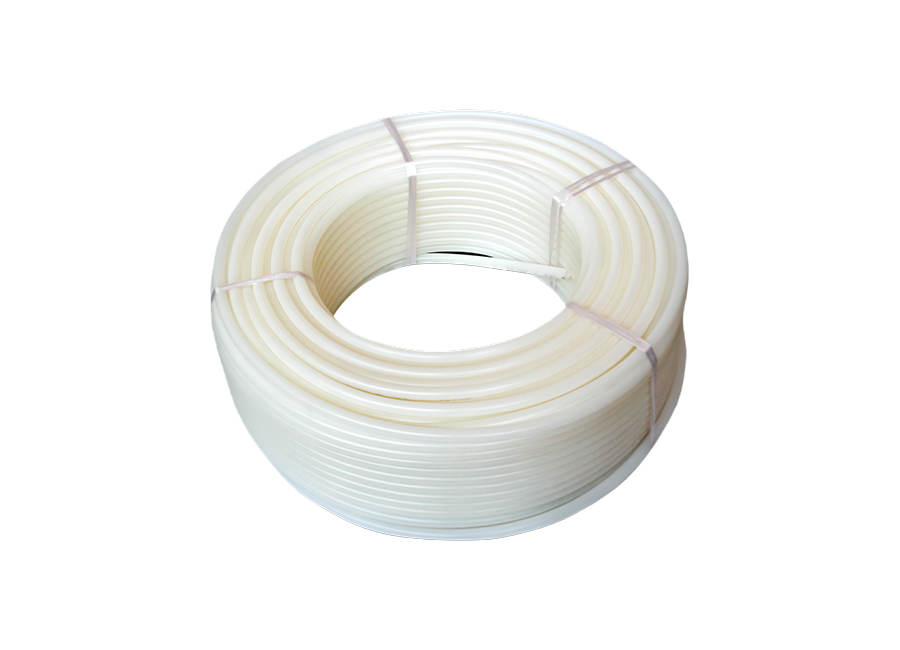
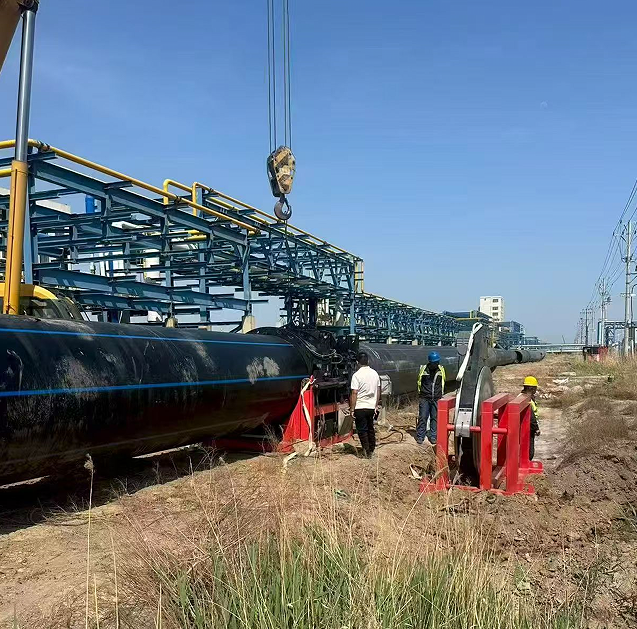
Small diameters are normally coiled, which cuts the number of joints in the ground and speeds installation. In practice, coils are common up to about 160 mm, with longer lengths available in the smaller sizes for trenchless and agricultural work. Beyond that, pipe is produced in 6 m or 12 m straight lengths, and the choice between them is a schedule decision as much as a cost decision: 12 m lengths halve the butt-fusion joint count on a long main but need a longer trailer, a heavier lifting plan and more right-of-way during stringing.
For export orders, coil diameter and coil weight determine how much pipe fits in a container, and straight lengths need to be checked against internal container dimensions before the freight is booked. It is worth asking for a loading plan alongside the quotation, because a size that is technically available can still be uneconomic to ship.
Fittings Must Match the OD — Sizing the Joint
Fusion joining makes the fitting a dimensional part of the pipeline, not an accessory. Butt fusion fittings are matched to the outside diameter: a 200 mm tee fuses to any 200 mm pipe within the qualified SDR range, but the heating and changeover parameters change with wall thickness, and the fusion machine must be rated for that diameter. Electrofusion fittings are tighter still, since the fitting is specified by both OD and SDR — the heating coil and melt volume are designed for a particular wall, and an SDR 11 coupling should not be used on an SDR 17 pipe.
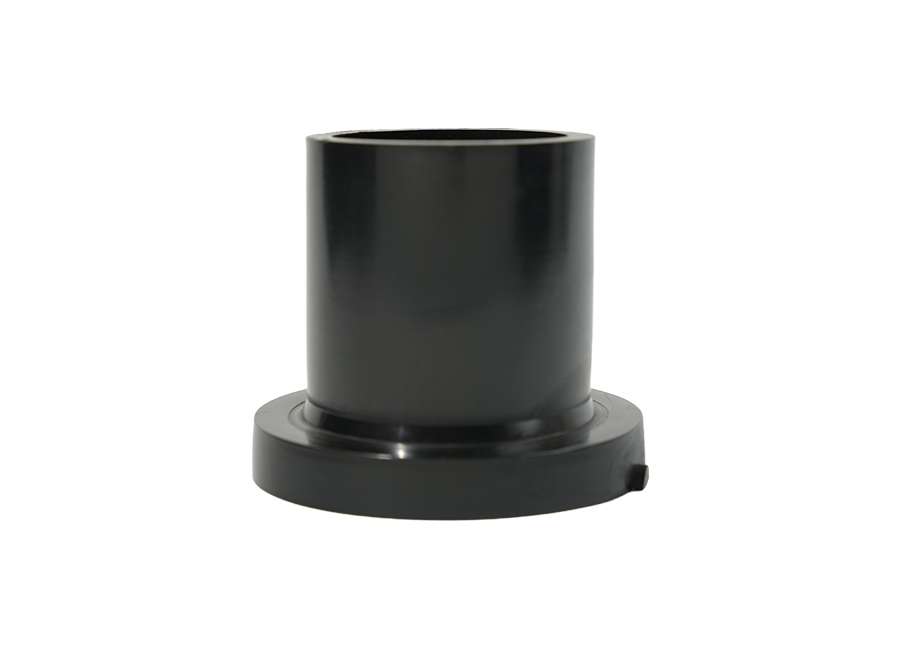
Reducing components should always be ordered with both dimensions written out, for example a 200 × 110 mm reducing tee, together with the SDR of each leg. Flanged connections need the stub end and backing ring sized to the pipe OD, and the flange drilling pattern confirmed against the mating valve or pump.
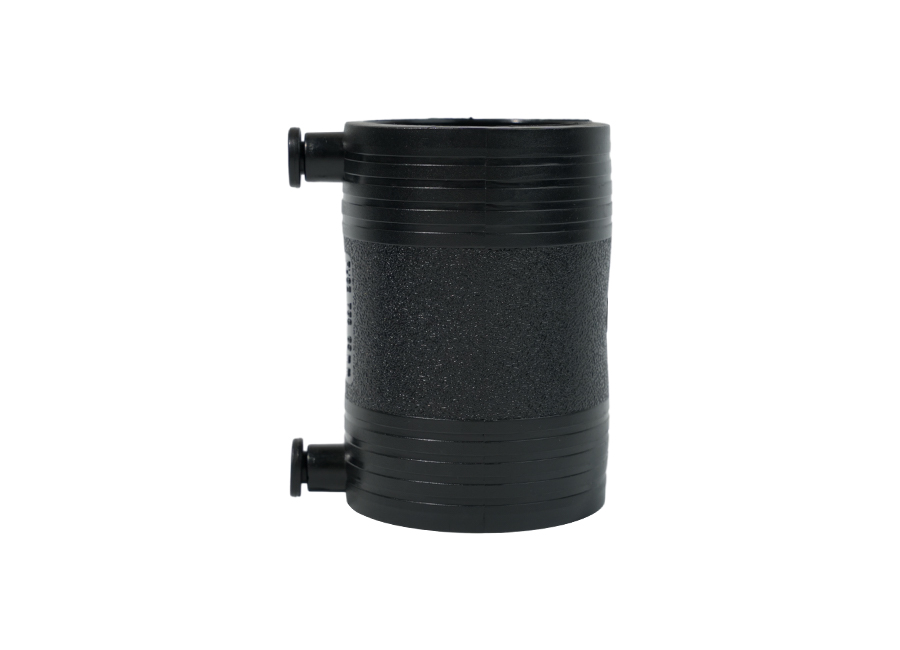 PE100 Electrofusion Coupling for HDPE Pipeline ConnectionsPE100 and copper electrofusion coupling in PN16 SDR11 and PN10 SDR17, sized DN25–DN400 and DN315–DN800, for sealed HDPE connections in water, irrigation, firefighting and drainage.View Product →
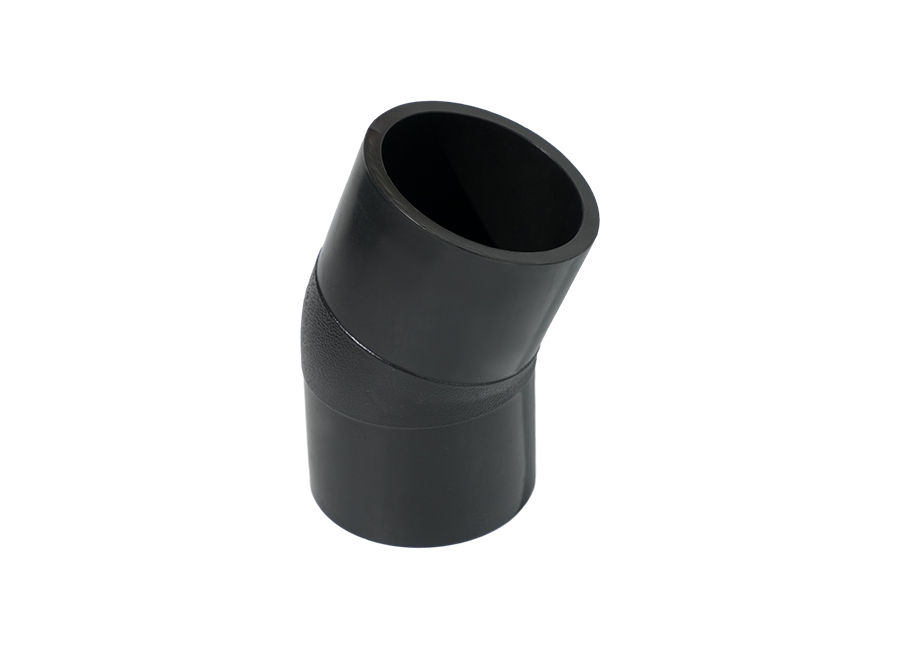
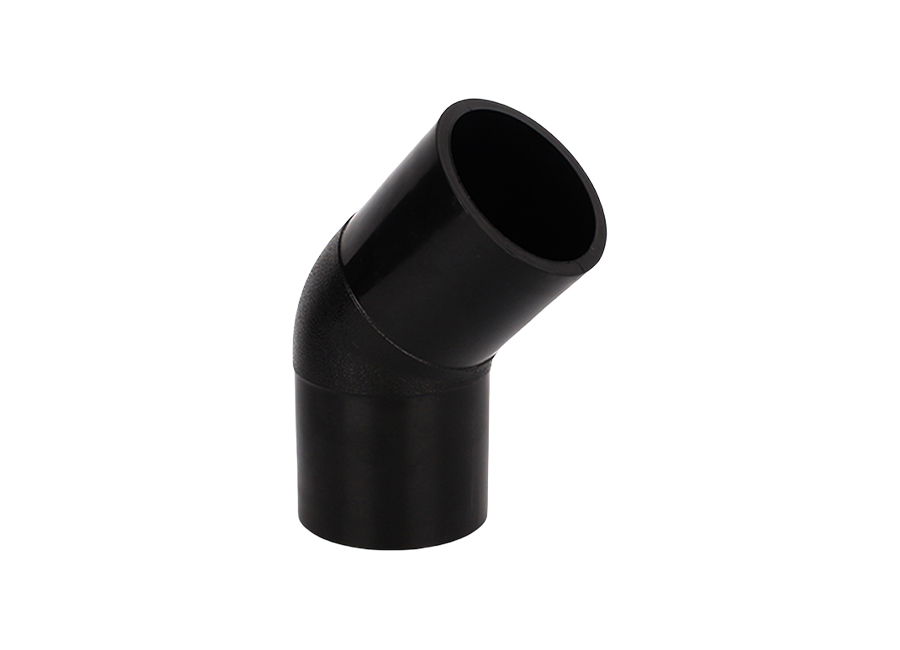
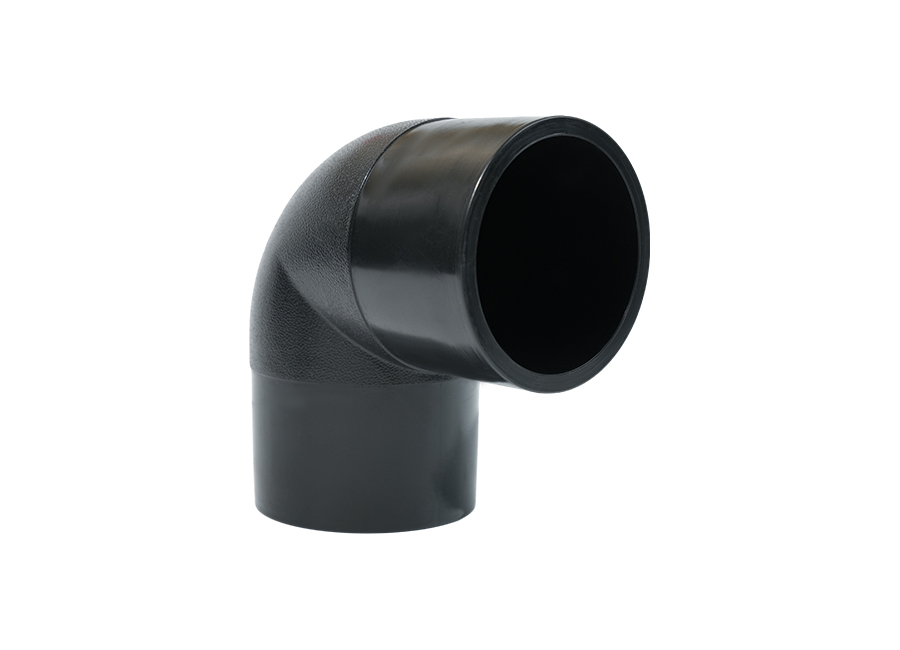
Where a project mixes diameters, the full PE pipe fittings range — tees, reducers, elbows, end caps and transition pieces — should be reviewed as a package so that every branch and termination is accounted for before the bill of materials is closed.
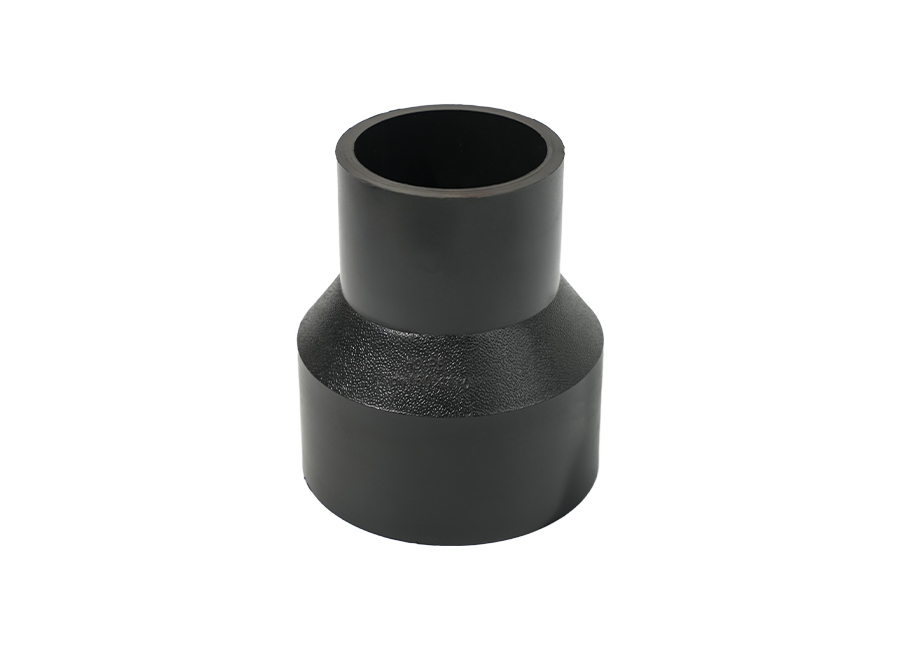 HDPE Reducing Coupling for Different Pipe DiametersPE100 reducing coupling joins different pipe sizes by socket or butt fusion, in PN10 SDR17, PN12.5 SDR13.6 and PN16 SDR11 for water and drainage.View Product →
A Buyer's Sizing Checklist
Use this list to sanity-check an RFQ before it goes out, or an incoming quotation before it is approved:
- State outside diameter and SDR (or PN) together — never the nominal size alone.
- Name the standard the pipe must meet, such as ISO 4427, EN 12201 or ASTM F714, and the resin grade (PE80, PE100 or PE100-RC).
- Confirm the sizing convention on the drawings: metric, IPS, CTS or DIPS.
- Specify supply form, length or coil size, and the maximum joint count acceptable to the installation method.
- Match every fitting by OD and SDR, and list reducers with both dimensions.
- Ask for minimum wall thickness and its tolerance, not just an average figure.
- Check temperature and chemical de-rating if the service conditions are not plain cold water.
- Request the marking format and test certificates with the quotation, so traceability is agreed before production.
For a deeper look at how to compare suppliers once the dimensions are settled, this PE pipe purchasing guide covers documentation, inspection and order confirmation in more detail.
Frequently Asked Questions
Q1. What does SDR 11 mean on a PE pipe?
SDR 11 means the outside diameter is eleven times the minimum wall thickness. For PE100 water service it corresponds to PN 16. On a 200 mm pipe the wall is 18.2 mm; on a 110 mm pipe it is 10.0 mm.
Q2. Is a 200 mm PE pipe 200 mm inside?
No. In the metric system the nominal size is the outside diameter. A 200 mm SDR 11 pipe has a bore of roughly 164 mm, while a 200 mm SDR 26 pipe has a bore of about 185 mm.
Q3. Can pipes of different SDR be fused on the same line?
Butt fusion is possible between matching outside diameters, but the parameters must be set for the thicker wall, and fittings must be rated for the higher pressure class. Electrofusion fittings are SDR-specific and cannot be interchanged.
Q4. Which PE pipe sizes are most common for water mains?
Metric distribution mains most often use 110 mm, 160 mm, 200 mm and 315 mm. The governing choice is the required flow and pressure, not the size itself, so hydraulic calculation comes first.
Q5. What is the largest PE pipe size available?
Large-diameter PE pipe is produced up to roughly 1600 mm outside diameter by specialist manufacturers, supplied in straight lengths with fabricated or wound fittings. Availability and lead time should be confirmed per project.
Q6. What should an RFQ include for an accurate quote?
Outside diameter, SDR or PN, standard, resin grade, supply form and length, total quantity, fitting list with dimensions, delivery port and any certification or custom marking requirements. Custom and OEM production is usually quoted only after these are confirmed.
If the dimensions are settled but the specification still needs checking, send the pipe and fitting schedule to the manufacturer for a dimensional review before the order is placed. Confirming OD, SDR, standard and jointing method at quotation stage is far cheaper than correcting a mixed delivery on site, and it gives the production team a clear basis for custom lengths, coil weights and OEM marking.